Collection · Essay · · 1 min read
From offers to origins
Tray liners are the largest printed surface a customer handles. Over twenty years, the archive’s liners stop selling deals and start explaining where the food comes from.
A tray liner is a poster that lies flat. It is the largest piece of printed paper a customer handles in the restaurant, it is in front of them for the length of a meal, and it is thrown away with the wrappers. That makes it a strange and useful object to collect: it records what a restaurant wanted to say to someone who had already bought something.
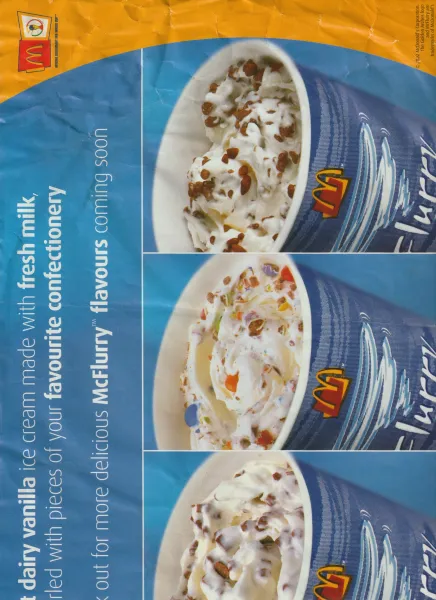
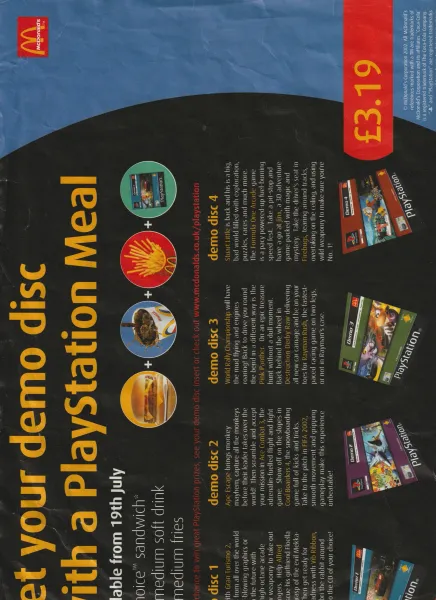
The two British liners from 2002 are full of things to do next. The McFlurry liner runs its copy sideways up the sheet beside three photographs of the dessert, promising “more delicious McFlurry flavours coming soon”. The PlayStation liner is denser still, with a price in a red tab, four columns of small type describing demo discs, and an offer “available from 19th July”.1
The liner as a map
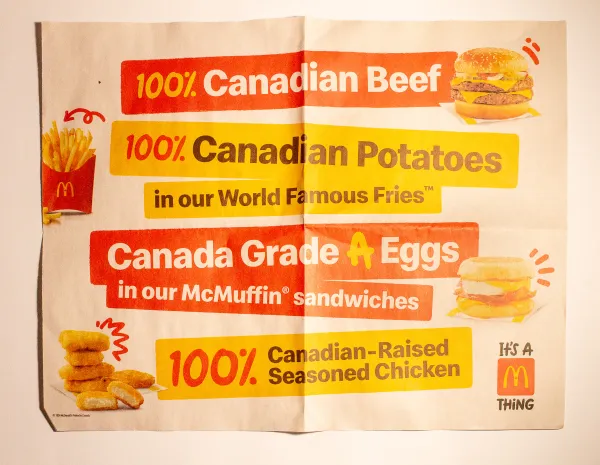
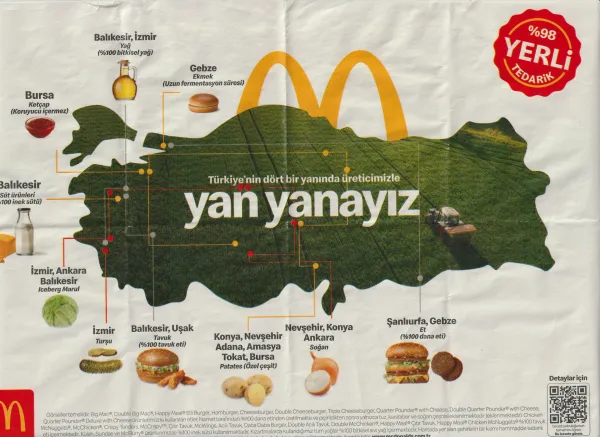
The newer liners are quieter about price and louder about place. The Turkish liner from 2025 is a map of the country with each ingredient pinned to the region it comes from, under the line “yan yanayız” and a red roundel claiming that 98 per cent of it is local. The Canadian liner from 2024 makes the same argument as a stack of slogans: Canadian beef, Canadian potatoes, Canada Grade A eggs, Canadian-raised chicken.
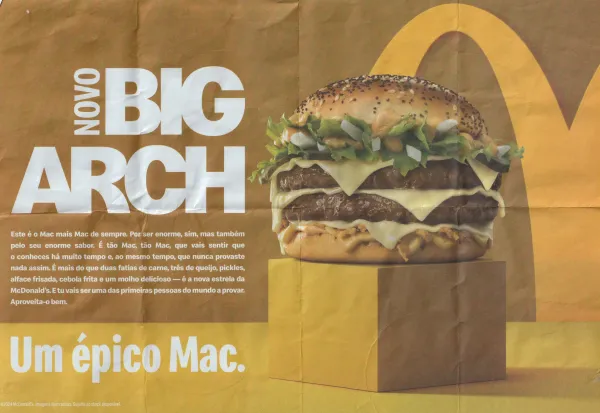
Not every recent liner has turned inward. Portugal’s 2024 liner for the Big Arch is a straightforward product poster, a photograph of the burger on a cardboard plinth with the line “Um épico Mac.” But across the archive the shift is clear enough to be worth looking for in the next liners I collect.2