Collection · Essay · · 1 min read
Brown paper, borrowed characters
For most of the 1990s, a British McDonald’s bag was either plain kraft paper printed in one colour or a full-colour advert for someone else’s characters.
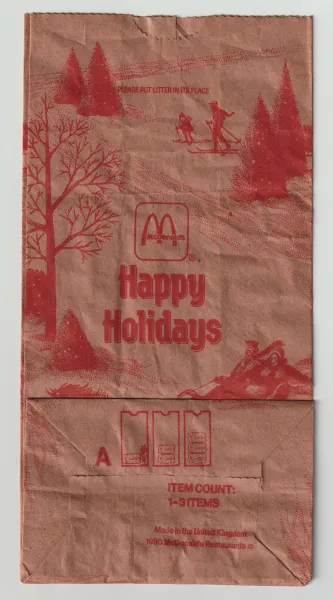
The cheapest way to print a paper bag is one colour on brown kraft paper, and the oldest bags in the archive show how much can be done with that. The 1990 Happy Holidays bag is printed only in red: a winter scene of trees, skiers and a cottage, the arches in a box, and at the bottom a grid for the staff to tick how many items are inside.1
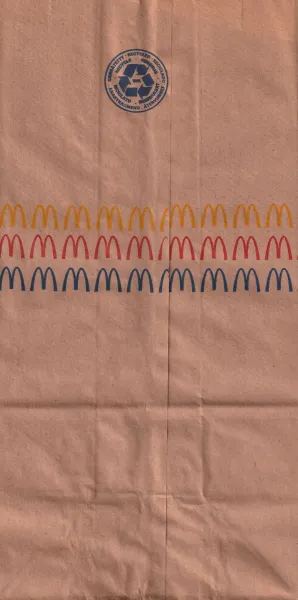
The Euro 96 bag uses the same paper and the same economy differently. Instead of a picture, it repeats the arches in three rows of yellow, red and blue, like a line of bunting across the bag.
Someone else’s characters
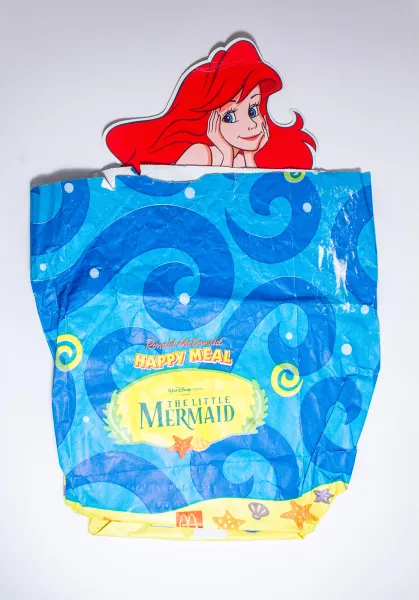
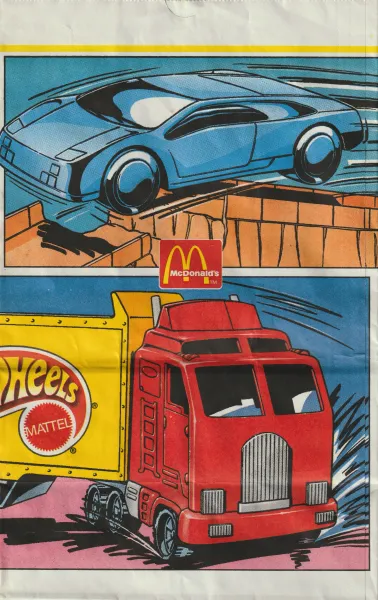
Two years later the bags look nothing like this. The 1998 Hot Wheels bag is printed in full colour on white paper, with a comic-book drawing of a blue sports car and a red truck, and the McDonald’s logo reduced to a small badge between them. The Little Mermaid Happy Meal bag goes further, with a die-cut Ariel rising from the top edge. Both bags are mostly advertising for a film or a toy, and the restaurant’s own identity becomes a sign-off.
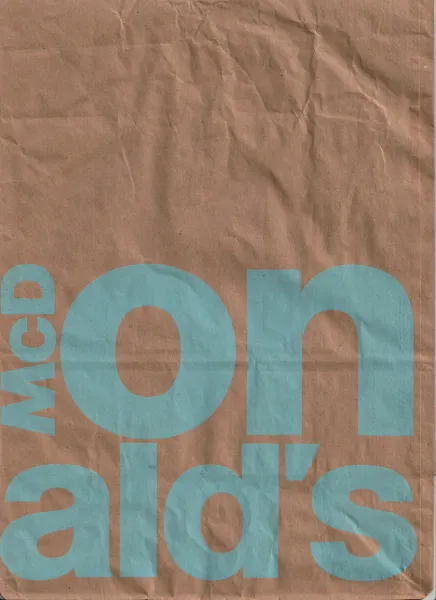
The 2024 bag from Ukraine returns to brown paper and one colour, but now the type is the picture: “McDonald’s” set so large in pale blue that only part of it fits on the bag.2